Macaw Boarding in Richmond Hill

Macaws are the largest companion parrots in the world — bold, intelligent, and spectacularly demanding. Their size, powerful beaks, impressive volume, and extraordinary intelligence mean that boarding a macaw requires spacious enclosures, robust enrichment, and experienced handling. This is not a bird you hand off to someone unfamiliar with large parrots.

Why Macaws Need Expert Boarding

Macaws combine size, strength, intelligence, and volume in a way no other companion bird does. With wingspans of three to four feet, bite pressure of 500 to 700 PSI in large species, vocalisations reaching 105 decibels, and lifespans of 50 to 80 years, these birds have evolved for a life that most domestic environments struggle to accommodate — and most boarding facilities are simply not equipped for.

At Avian Haven, we understand what macaws need. Spacious flight-capable enclosures with heavy-duty stainless steel construction and macaw-grade bar spacing. A varied, fat-inclusive diet with fresh produce, cooked legumes, and healthy nuts. Large destructible wood toys and puzzle feeders that challenge their formidable intelligence. And handlers who read macaw body language fluently — feather puffing, tail fanning, beak grinding, eye pinning — and respond with confidence, not fear.

  • Spacious enclosures with macaw-grade bar spacing (1" to 1.5")
  • Daily supervised out-of-cage flight and exercise time
  • Heavy-duty stainless steel toys and climbing structures
  • Varied diet with healthy fats, fresh produce, and cooked legumes
  • Experienced handlers trained in large-parrot body language
  • Multiple daily engagement sessions to prevent boredom and depression
  • Positioned away from noise-sensitive species

Macaw receiving interaction and enrichment during boarding at Avian Haven Richmond Hill

Our Macaw Care Plan

Every boarded macaw receives an individualized care routine built around six critical areas that determine their wellbeing.

Spacious Enclosures

Macaws need room to spread their wings — literally. Our macaw enclosures are large enough for full wing extension, built with macaw-grade bar spacing of 1 to 1.5 inches to prevent head and toe entrapment. All enclosures use heavy-gauge stainless steel or powder-coated welded construction with heavy locks that withstand even the most persistent macaw. These birds are strong, clever, and determined — our hardware is built to match.

Nutrition Programme

Macaws have different dietary needs than most companion parrots. They tolerate and benefit from more fat in their diet than smaller species. We provide high-quality pellets as a base, supplemented with a wide variety of fresh fruits and vegetables, cooked legumes like lentils and chickpeas, and moderate portions of healthy nuts — almonds, walnuts, Brazil nuts, and macadamias. Avocado, chocolate, and caffeine are strictly excluded. We follow your specific dietary instructions for every meal.

Enrichment & Flight

A bored macaw is a destructive, unhappy macaw. We provide large destructible wood toys that satisfy their need to chew and shred, puzzle feeders that challenge their problem-solving abilities, and foraging opportunities that make them work for their food. Every macaw receives daily supervised out-of-cage time with access to climbing structures, play stands, and flight-safe areas where they can stretch and exercise their powerful wings.

Beak & Foot Health

Macaw beaks are among the most powerful in the parrot world. Maintaining beak condition requires appropriate conditioning toys — hardwood blocks, mineral blocks, and natural branches. We provide natural wood perches of varying diameters to promote healthy foot muscles and prevent pressure sores, which are a common issue in large parrots kept on uniform perching. Nail length is monitored throughout the stay and we alert owners if trimming is needed.

Noise Management

Macaws are loud — there is no way around it. Large macaws can produce calls reaching 105 decibels, and dawn and dusk contact calls are a normal, healthy behaviour we never attempt to suppress. We position macaws in designated areas of our facility away from noise-sensitive species. Our team understands that excessive screaming outside normal call times typically signals unmet needs, and we address the root cause through enrichment and interaction.

Emotional Intelligence

Macaws are among the most socially intelligent birds on earth. They form deep bonds, read human emotions, and can become genuinely depressed without adequate interaction. A lonely macaw may stop eating, become lethargic, or develop feather-destructive behaviour. We schedule multiple daily engagement sessions — talking, gentle handling, training reinforcement, and supervised play — to ensure every macaw feels seen, stimulated, and socially fulfilled throughout their stay.

Macaw Varieties We Care For

We board all macaw species. Each has unique traits that we account for in their care plan.

Blue & Gold Macaws

The most popular pet macaw for good reason. Blue and Gold macaws are social, playful, affectionate, and excellent talkers. At approximately 85 centimetres in length, they are large birds that need substantial space. They tend to adapt well to new environments and handlers, making them among the easier macaw species to board — though "easy" is relative when you are dealing with a bird this size and this smart. Their sociable nature means they thrive with frequent interaction.

Scarlet Macaws

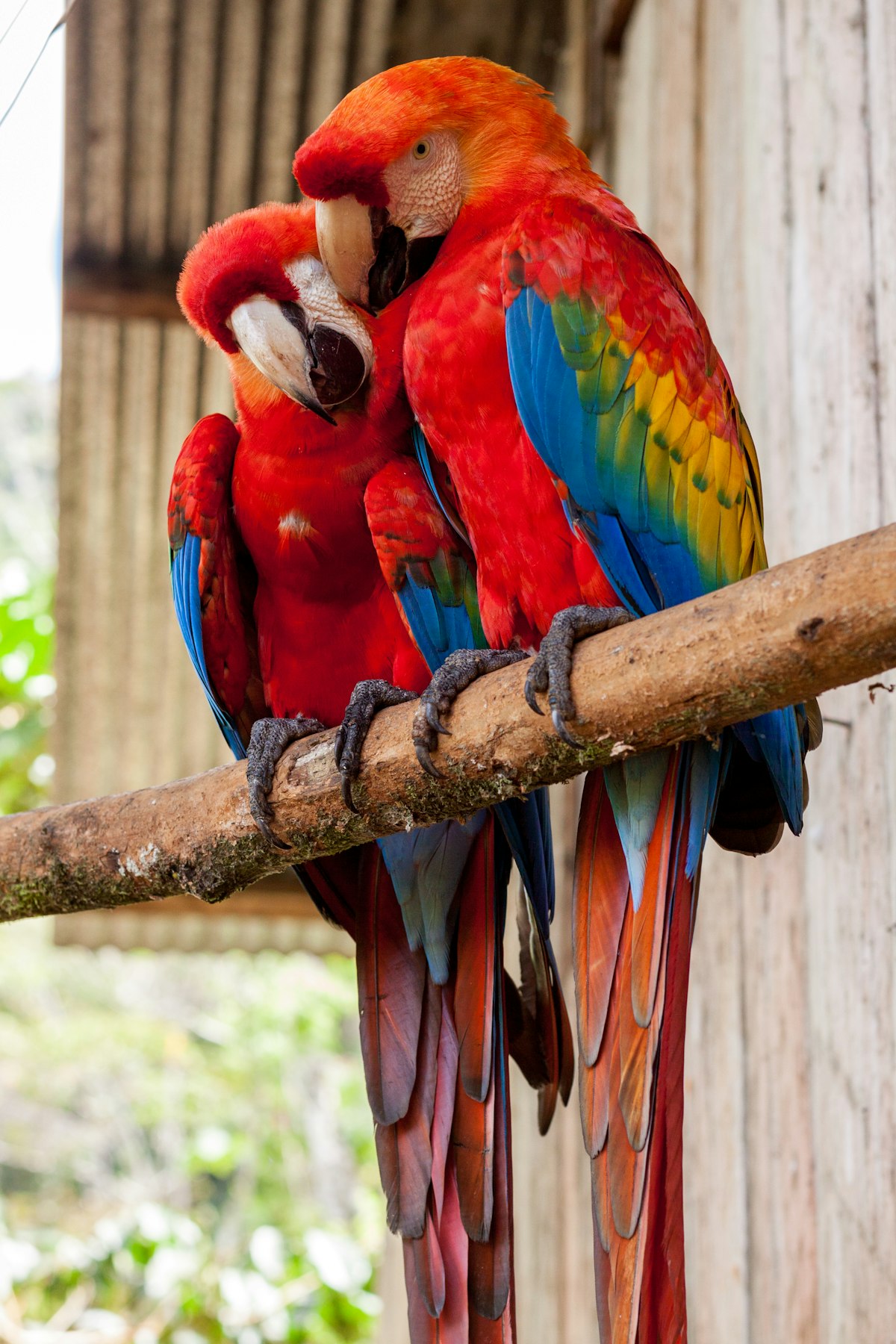
Visually stunning and highly intelligent, Scarlet macaws can be more nippy than some other macaw species, particularly with unfamiliar handlers. They require firm but gentle handling, clear boundaries, and patience. Scarlets are known for testing limits and reading handler confidence — our experienced team knows how to work with their assertive personalities without confrontation. When respected and handled correctly, they are remarkably engaging, curious birds.

Green-Winged Macaws

Often called the "gentle giant" of the macaw world, Green-Winged macaws are among the largest common pet macaws and typically have a calmer, more even temperament than Scarlets or Blue and Golds. They tend to be less nippy and more tolerant of handling, though their sheer size — and one of the most powerful beaks in the parrot kingdom — demands respect and experienced care. Their gentle disposition makes them a favourite among our handlers.

Hyacinth Macaws

The largest parrot species in the world at over 100 centimetres in length, Hyacinth macaws require massive enclosures, specialized handling, and a unique diet heavy in palm nuts and other high-fat nuts. Their beaks can crack coconut shells. Boarding a Hyacinth demands the highest level of facility preparation and handler experience. We work closely with Hyacinth owners before boarding to ensure every aspect of their bird's care is tailored to this extraordinary species.

Military Macaws

Medium-large macaws that tend to be loyal, devoted, and sometimes fiercely one-person birds. Military macaws can be cautious or standoffish with unfamiliar handlers and need patience during the adjustment period. Our team gives Military macaws the space and time they need to build trust, without forcing interaction. Once comfortable, they are playful, intelligent, and surprisingly affectionate — but earning that comfort takes consistency and respect.

Hahn's & Noble Macaws

The mini macaws — all the macaw personality packed into a 30 to 35 centimetre frame. Hahn's and Noble macaws are energetic, vocal, playful, and full of attitude. They make excellent companions and adapt relatively well to boarding situations. Despite their smaller size, they still have strong beaks and big voices. Mini macaws are priced at our Medium tier — $20/day.

What to Bring for Your Macaw's Stay

Familiar items help macaws settle into a new environment more quickly. Bringing pieces of home reduces stress and gives our team important context about your bird's preferences.

  • Favourite toys — especially comfort items, preferred chew toys, or any toy they are particularly bonded to
  • Their regular food — pellet brand, preferred nuts, and any specific fresh food favourites
  • Care instructions — daily routine, favourite phrases or words, known triggers, preferred interaction style, bedtime routine
  • A familiar item — a worn shirt or blanket with your scent can be comforting, particularly for strongly bonded macaws
  • Vet contact — your avian vet's name and phone number in case of emergency
  • Medication — if applicable, with clear dosing instructions
  • Handling notes — how your macaw prefers to step up, any body areas they dislike being touched, bite history or triggers

We provide heavy-duty macaw-appropriate enclosures. If you prefer to bring your own cage, ensure it meets macaw standards — minimum bar spacing of 1 inch, heavy-gauge stainless steel or powder-coated construction, and secure locking mechanisms.

Preparing your macaw for boarding at Avian Haven Richmond Hill

Pricing

Macaw boarding is priced at our XL tier. All rates include food, enrichment, daily out-of-cage time, health monitoring, cage cleaning, and photo updates.

$30
Daily Sitting
$185
Weekly Boarding
$720
Monthly Boarding (7+ days)
See Full Pricing

Macaw Boarding FAQ

Can your facility accommodate macaw wingspan?

Yes. Our macaw enclosures are spacious enough for full wing extension, which is essential for muscle tone and joint health. In addition to their enclosure, every macaw receives daily supervised out-of-cage time in our flight-safe areas where they can stretch, fly, and exercise freely on large play stands and climbing structures.

How do you handle macaw biting?

Our experienced handlers read macaw body language carefully — eye pinning, feather puffing, tail fanning, and beak posturing all signal mood and intent. We never punish a bite. Instead, we use redirection with enrichment, maintain consistent boundaries, and respect each bird's comfort level. Understanding why a macaw bites is far more effective than reacting to it. Most biting occurs when handlers miss or ignore warning signals.

What diet do macaws get during boarding?

Macaws receive a balanced diet of high-quality pellets, a wide variety of fresh fruits and vegetables, cooked legumes, and moderate nuts. Unlike many smaller parrot species, macaws tolerate and benefit from a higher fat content in their diet — healthy nuts like almonds, walnuts, and Brazil nuts are included in appropriate quantities. We always follow owner-provided dietary instructions and avoid toxic foods including avocado, chocolate, and caffeine.

Do macaws get out-of-cage time?

Yes, daily supervised out-of-cage time is a non-negotiable part of our macaw care plan. Macaws are large, active birds that need space to fly, climb, and exercise. Each macaw gets time on large play stands, climbing structures, and in our flight-safe areas. This is critical for physical health, mental stimulation, and preventing the frustration that comes from confining a bird with a three-to-four-foot wingspan.

How loud are macaws — will they disturb other birds?

Macaws are loud — some species produce calls reaching 105 decibels or more. We position macaws in designated areas of our facility away from noise-sensitive species. Dawn and dusk contact calls are natural macaw behaviour and we never attempt to suppress them. Our facility is designed to accommodate the vocal range of large parrots while minimising stress for quieter species housed in separate zones.

Can you board multiple macaws from the same household?

Yes, we regularly board bonded pairs and multi-macaw households. Bonded macaws are housed together or in adjacent enclosures with visual and auditory contact. We carefully observe dynamics between birds and will separate them if we notice signs of aggression, resource guarding, or stress. For macaws from the same home that are not bonded, we ensure they are close enough for comfort but have their own space.

Related Species Guides

View All Species

Book Macaw Boarding

Your macaw deserves a boarding experience that matches their size, intelligence, and social needs. Contact us to discuss your bird's personality, care requirements, and schedule their stay.

Get a Quote View All Species